Your radon test results tell you how much radon gas is in the air you breathe in your home. The number is shown in pCi/L, and higher numbers mean higher risk. The U.S. EPA says you should take action when results are at or above 4.0 pCi/L. In Rhode Island, many homes have basements and lower levels, so testing the lowest level is important. Radon is invisible and has no smell, so testing is the only way to know your level. If your number is high, the next step is usually a follow-up test or a radon mitigation system. RI Affordable Radon Systems helps homeowners across Rhode Island and eastern Connecticut with radon testing and mitigation.
What Your Radon Number Means
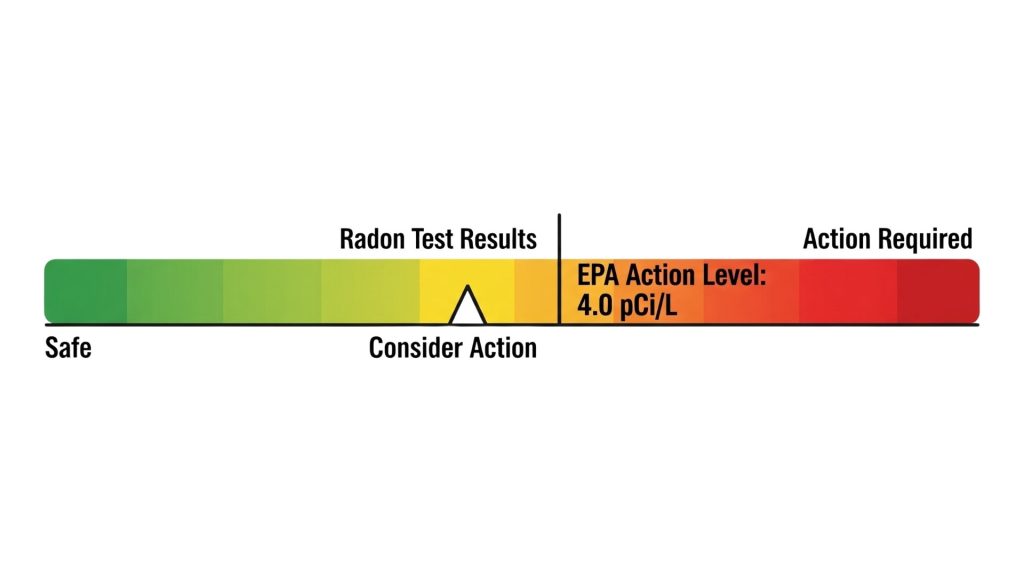
Radon numbers are measured in pCi/L, which means picocuries per liter of air. This is simply a way to count tiny radioactive events in the air. A result of 1.0 pCi/L is lower than a result of 5.0 pCi/L. The EPA action level is 4.0 pCi/L, so that number matters most when you read your report. Even so, there is no radon level that is called completely risk-free. Lower is always better, especially over many years. Your report may also say if the test was short-term or long-term, and that changes how you read the number.
Why Radon Test Results Can Change
Radon levels can go up and down from day to day. The weather can change how air moves through soil and into a home. Rain, snow, and frozen ground can push more soil gas toward the foundation. Wind can also change the pressure around your home and pull radon inside. How you use your home matters, too, like opening windows or running fans. Because levels change, one test is a snapshot, not a lifetime guarantee. That is why follow-up testing is a smart step when a result is close to the action level.
Quick Guide to Common Radon Test Results
Most homeowners want a simple guide. The safest plan is to match your next step to your number. Use these ranges as a clear guide. Keep in mind that a short-term test can be affected by short-term changes in weather and house conditions. If you are in a real estate timeline, you may need faster decisions, but accuracy still matters. The EPA action level stays the same, even if the home is new or old. If you are not sure what type of test you had, ask your tester to explain it in plain words. RI Affordable Radon Systems can walk you through what your report means and what to do next.
If Your Result Is Below 2.0 pCi/L
A result below 2.0 pCi/L is a good sign. It means your home is currently at a lower level compared to many homes. Even so, radon can change over time, so it is smart to test again in the future. If you finish a basement or start using a lower level more often, test again on that level. The goal is to keep your family safer year after year. Also, if you do big work on the home, like new windows or new HVAC, testing again is wise. These changes can affect how air flows in the house.
If Your Result Is Between 2.0 and 3.9 pCi/L
This range is below the EPA action level, but it is still worth paying attention to. It means radon is present at a moderate level. Many homeowners choose to plan ahead, especially if kids use the basement or playroom. You can also retest with a long term test to learn your true average. A long-term test can better reflect normal living over time. If you smoke or someone in the home has lung health risks, lowering radon can matter even more. The next step might be monitoring now and planning mitigation later.
If Your Result Is 4.0 pCi/L or Higher
At 4.0 pCi/L or higher, the EPA says you should take action. A good next step is a follow up measurement to confirm the level and guide your plan. Some people do a second short term test, and others do a long term test when time allows. If your short term result is between 4.0 and 8.0 pCi/L, many guides suggest a longer test to better estimate the yearly average. If your result is very high, you may not want to wait long before fixing the problem. The safest path is to talk with a qualified radon contractor and move forward with a clear plan. RI Affordable Radon Systems provides radon testing and mitigation services across Rhode Island and eastern Connecticut.
Simple Steps to Get a More Accurate Follow Up Test
Testing the right way helps you trust the number. A few small mistakes can change your result. Follow the test directions closely, and ask questions if anything is unclear. In many cases, you will want closed house conditions during a short term test. That means keeping windows closed except for normal entry and exit. Place the device in the lowest level that you live in, not in a crawl space you never enter. Keep the device away from drafts, heat, and direct sunlight.
- Test in the lowest lived in level of the home
- Keep windows closed during a short term test, following the kit rules
- Do not place the test in a kitchen, bathroom, or laundry area
- Keep it away from fans, vents, and exterior doors
What Radon Mitigation Does and What to Expect
Radon mitigation lowers radon levels by moving radon gas out from under the home and safely venting it outside. A common system is designed around the home’s foundation and uses a radon fan and piping. The goal is to reduce radon and keep it reduced. After installation, a post mitigation test confirms the system is working well. A good contractor will explain where the pipe and fan will go and how the system will look. They should also review noise, power use, and basic care. RI Affordable Radon Systems offers radon mitigation installations and clear service options for homeowners, along with strong warranties.
What to Do Next if Your Radon Test Results Are High
When you see a high number, it is normal to feel worried. The good news is that radon problems are very fixable. The key is to take the next step quickly and clearly. Start with a follow up test if needed, then move to a mitigation plan. If you are buying or selling a home, timing matters, so work with a company that communicates well. Ask for a clear scope of work and what results you should expect after installation. Also ask what testing is included after the system is installed.
- Confirm the result with a follow up test when appropriate
- Choose a qualified radon contractor to design the right system
- Install the mitigation system and then retest to confirm results
- Plan to retest in the future, especially if you change how you use the home
Conclusion
Understanding your radon test results starts with one key number, your pCi/L reading. If your radon test results are at or above 4.0 pCi/L, taking action is strongly recommended. If your number is lower, it is still smart to retest over time, especially if you begin living in a lower level. Radon levels can change, so good testing habits matter. When results are high, a follow up test and a well designed mitigation system can make your home safer. RI Affordable Radon Systems provides radon testing and mitigation for homeowners in Rhode Island and eastern Connecticut, with a focus on clear service and long term results.